
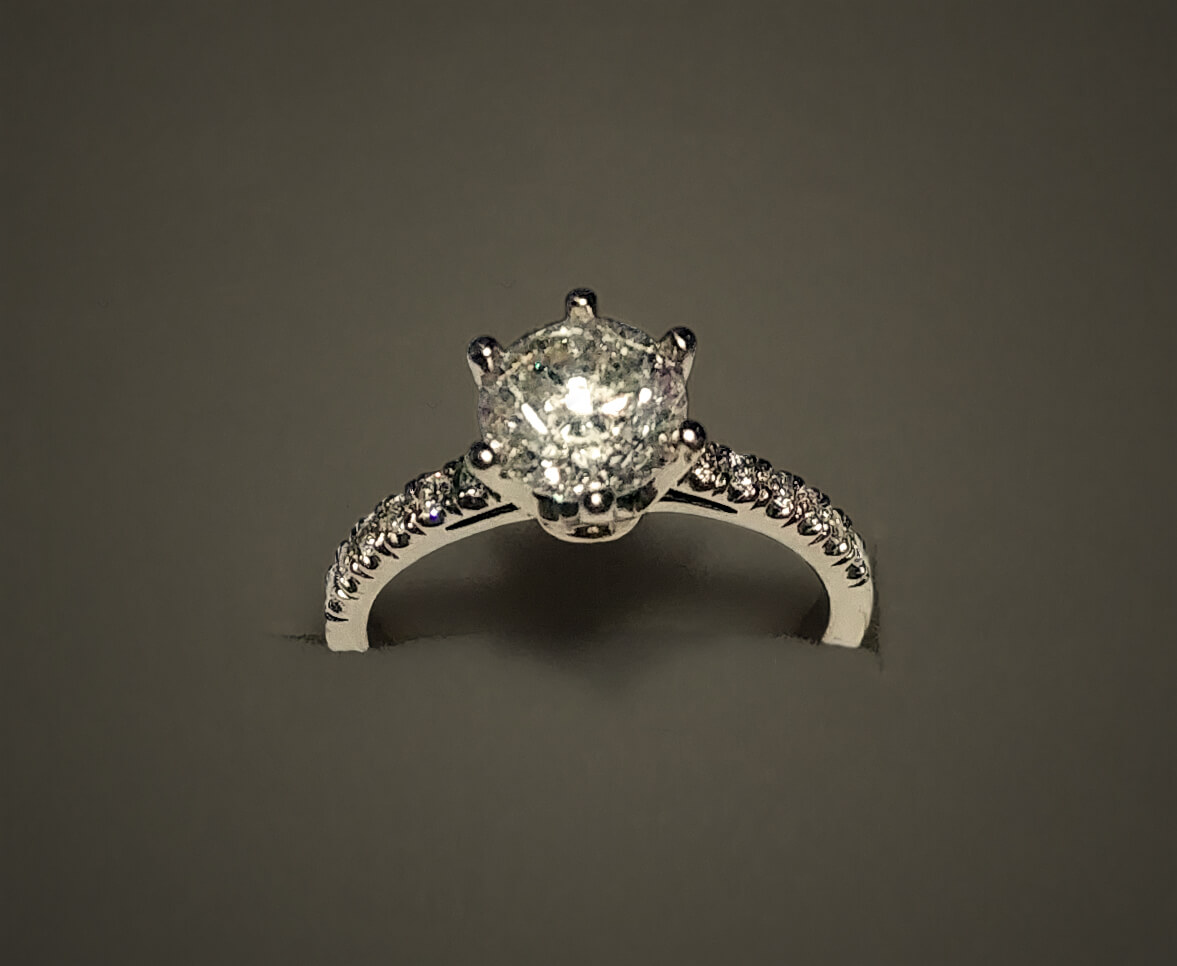
Brylantem określa się diament formy okrągłej z pełnym szlifem brylantowym. Szlif brylantowy jest najbardziej znanym rodzajem szlifu jubilerskiego stosowanym dla diamentu. Wynaleziony w XVII wieku, wyparł dotychczas stosowany szlof rozetowy.
Szlif brylantu
Szlif brylantowy jest uznawany za szczyt osiągnięć mistrzów jubilerstwa. Pełny, klasyczny szlif brylantowy zawiera nie mniej niż 58 fasad (ścianek). 33 na górze, 24 na dole plus podstawa, które to nadają diamentowi piękne walory optyczne. Od jakości szlifu zależy wyjątkowa właściwość brylantu czyli jego blask.
Bardzo ważną cechą jakości brylantu jest cecha związana z brakiem zabarwienia diamentu. Wartość diamentu spada wraz ze wzrostem zażółcenia. Najczęściej występuja diamenty od bezbarwnego (najczystsza biel D) do zółtego (stonowana biel L)W jubilerstwie najczęściej stosowane są diamenty o barwie od H do P. Największą popularnością cieszą się brylanty o barwie H (biały) w połączeniu z czystością SI. Barwy od D – G występują w kamieniach bardzo drogich.
I tak według skali GIA rozróżniamy barwy:
D – barwa biała
E – biała
F – biała
G -bliska białej
H – bliska białej
I – bliska białej
J – bliska białej
K – bardzo słabe żółte
L – słabe żółte
M – słabe żółte
N-O-R – bardzo jasne żółte
P-Q-R bardzo jasne żółte
S-T-U-W – jasne żółte
W-X-Y-Z – żółte
Czystość brylantów
Kolejną bardzo ważną cechą wpływającą znacząco na jakość i wartość kamienia jest CZYSTOŚĆ. Wyróżnia się 7klas czystości LC, VVS, VS, SI, P1, P2, P3. W jubilerstwie użytkowym najczęsciej stosowane są diamenty z zakresu VS do P1. Diamenty z kategorii LC i VVS należą do bardzo drogich i o wiele rzadziej wystepujących. Największa popularnością w jubilerstwie cieszą się brylanty o czystości SI najczęściej w połączeniu z barwą H. I w kolejności oznaczenia czystości znaczą tyle co:
LC – kamienie o najwyższej jakości „lupowo czyste”, nawet przy użyciu lupy, nie wykazuję się żadnych znamion (inkluzji, defektów)
VVS – diamenty zawierające bardzo małe znamiona wewnętrzne, bardzo trudne zauważalne przy użyciu lupy
VS – diamenty, które zawierają bardzo małe znamiona wewnętrzne, średnio lub stosunkowo łatwo zauważalne przy uzyciu lupy (dla fachowca)
SI – diamenty o małych znamionach wewnętrznych, bardzo łatwo zauważalnych przy użyciu lupy, natomiast nie widoczne „gołym okiem”
P1 – diamenty o znamionach wewnętrznych trudno zauważalnych dla nieuzbrojonego oka. Inkluzje wyraźnie widoczne „gołym okiem” ale trudne do rozpoznania
P2 – diamenty, które zawierają duże lub liczne znamiona wewnętrzne, dobrze widoczne gołym okiem możliwe do rozpoznania, obniżające nieznacznie brylantację diamentu
P3 – diamenty, które zawierają liczne znamiona wewnętrzne, bardzo dobrze widoczne „gołym okiem” , możliwe do rozpoznania. Zajmują ok. 50% powieszchni kamienia, obniżające w znaczący sposób brylantację diamentu.
Szlif brylantu
Szlif – jest bardzo istotnym parametrem, ponieważ dzięki właściwemu oszlifowaniu diamentu, promienie świetlne mogą ulec całkowitemu wewnętrznemu odbiciu i rozszczepieniu. Rozróżniamy szlify :
***
*inkluzja – ciało obce znajdujące się w minerale
*brylantacja – zjawisko świetlne w postaci iskrzących się odbić