
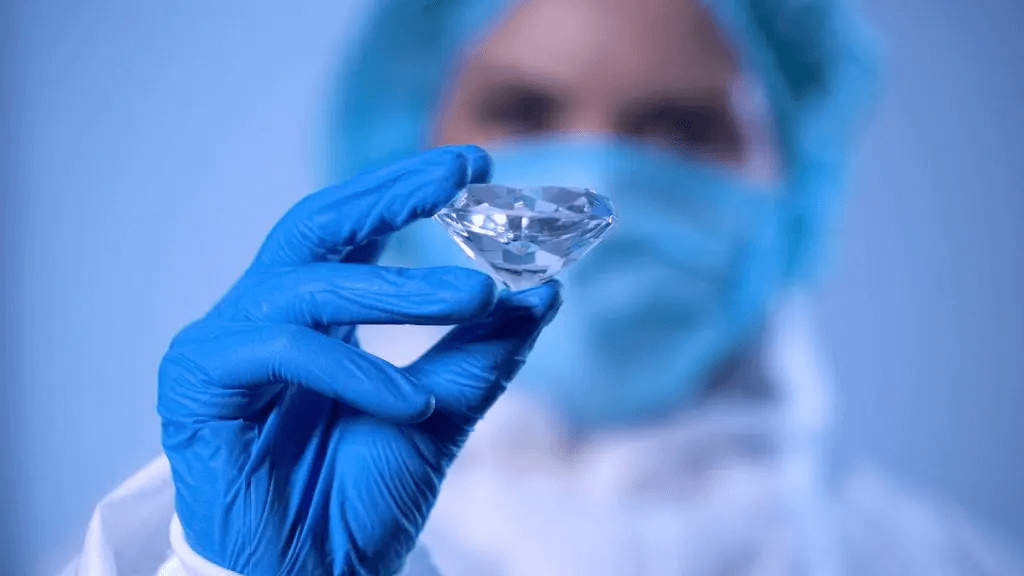
Since laboratory diamond-growing technology has gained popularity, the question of how large a diamond can be grown under human-controlled conditions is increasingly common. In this article, we will guide you through the process of growing these precious stones and present the largest specimens of synthetic diamonds. We invite you to read!
HOW ARE LAB-GROWN DIAMONDS MADE?
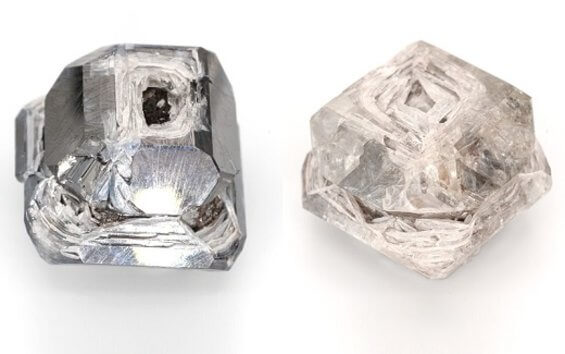
The diamond laboratory houses innovative machines designed solely for the purpose of growing diamonds. Technological progress has made it possible to cultivate diamonds in order to accurately replicate the conditions under which mined diamonds are formed – with one very important exception: laboratory-grown diamonds grow exceptionally fast. Laboratory-grown diamonds begin their life as seeds of carbon.Just as seedlings bloom into flowers and lush plants in a greenhouse, carbon seeds transform into beautiful diamonds in the laboratory. Over time, intense conditions such as heat and pressure crystallize the carbon into an extraordinary diamond.
How long does it take to grow a diamond in a laboratory? Just a few weeks. Of course, the time needed to grow a diamond will determine its size, but the processes are relatively similar. The result is an extraordinary diamond full of fire, brilliance, and scintillation.
Here is a detailed look at the two main methods of laboratory diamond cultivation:
-
HPHT Method (High Pressure, High Temperature)
The original method of growing diamonds in a laboratory reproduces the same natural conditions that are required for diamond formation. Creating an environment conducive to diamond cultivation involves using a belt press, a split-sphere press, or a cubic press. All of these mechanical presses are large enough to apply two elements:
– extreme pressure
– high temperature
The mechanical press uses these two conditions to form diamond from carbon. With the introduction of extreme heat (about 2000 °F) and about 1.5 million pounds of pressure per square inch, a distinct crystal structure begins to form.
This precise and controlled environment allows the seed to act as a base on which the carbon lattice grows. During the growth process, the crystalline layers bond together, and the carbon melts. In the end, the diamond seed is cooled to a crystalline carbon structure.
Although this process creates an ideal environment for diamond production, a more commercially used method is chemical vapor deposition (CVD).
-
CVD-accented engagement ring
CVD is similar to HPHT because it uses a part of a diamond seed to grow a diamond. However, it differs in the elements used. While HPHT relies on extreme heat and pressure, CVD uses gas vapors, heat, and low pressure. First, a part of the diamond is placed in the CVD reactor. Then, at very low pressure, a mixture of carbon gas vapors fills the chamber, and microwaves ionize the gases into plasma.When the temperature in the chamber is very high, the ionized plasma breaks down gas molecules and allows carbon to bind with the diamond seed. In a short time, the layers of the crystal form into crystalline carbon.
Although the processes differ from each other, the result is the same: an impressive diamond grown in a laboratory.
DOES THE GROWTH PROCESS AFFECT SIZE?
The most commonly used process for growing diamonds is HPHT, because it has existed the longest. However, CVD is quickly emerging at the forefront of the industry. In terms of size, HPHT has proven capable of growing very large diamonds, with sizes exceeding 10 carats. However, the landscape of laboratory diamond growth technology is constantly expanding and highly competitive. In recent years, CVD has filled the gap between HPHT, increasing its production capabilities from 6 carats to over 9 carats.In fact, the largest laboratory-grown diamond in the world is a 155-carat disk-shaped diamond grown using the CVD method.
THE LARGEST SYNTHETIC DIAMONDS
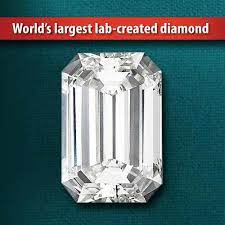
The International Gemological Institute (IGI), the world’s largest independent gemological laboratory, analyzed and classified a 30.18-carat synthetic diamond with an emerald cut as the largest (so far) in the world. Produced by Ethereal Green Diamond, LLP, the 30.18 ct “Pride of India” is the first laboratory-grown diamond that, after the cutting process, exceeded a weight of 30 ct (carats).Previous records belong to stones weighing 27.27 and 20.24 ct, analyzed and evaluated by IGI in 2022.
Although both processes differ from each other, the capabilities in terms of size seem to increase with technological progress. This means that, essentially, there are no limits to how large lab-grown diamonds can be; the size depends on the time needed to grow them.Moreover, lab-grown diamonds are recommended for large-sized stones because the growth process is meticulously controlled, resulting in diamonds without inclusions, thus without compromising quality and brilliance.
CERTIFIED DIAMONDS FROM 79 DIAMONDS
We are wholesalers of jewelry diamonds of various weights, clarity, and color. Our stones are certified by international companies such as GIA/IGI/HRD/EGL. The prices of our diamonds start at a 10% discount, up to even 40% below the usual price list. If you are looking for a stone according to a specific specification, it is possible to order it; the delivery time is 10-14 business days. If you are looking for a diamond that we do not have, we invite you to contact us at the e-mail address: 79elem@gmail.com, or by phone: +48 783 340 871. We will try to source a diamond for you quickly and easily, even from the other side of the globe!
Our stones are also used by us for creating custom jewelry– engagement rings, earrings, and wedding bands. Thanks to the fact that we have diamonds at very good prices, we can create jewelry that stuns with its appearance and craftsmanship, but not with its price..