

Podkreślać swój indywidualny, wyjątkowy styl można na wiele sposobów – poprzez ubiór, tatuaże, charakterystyczny makijaż czy fryzurę. Nie mniej ważna jest biżuteria, która poza rolą eleganckiego dodatku, jest dla wielu osób także istotnym elementem określającym ich przekonania i upodobania. Doskonałym przykładem są symbole religijne, umieszczane na wszelkiego rodzaju „błyskotkach” – wzory te są najczęściej spotykanym motywem ozdobnym w biżuterii na świecie.

Subiektywne znaczenia symboliki religijnej w biżuterii
Popularne znaki buddyjskie, chrześcijańskie i wiele innych, związanych z konkretnymi wyznaniami, przez niektórych traktowane są niczym starożytne amulety, chroniące przed nieszczęśliwymi wypadkami, dla innych zaś są przekazywaną z pokolenia na pokolenie rodzinną pamiątką, dla jeszcze innych są po prostu ciekawym, czasami kontrowersyjnym wzorem, wykorzystywanym w modzie, który pomaga wyróżniać się w tzw. „tłumie”. Bez względu na przypisywaną im funkcję, symbole religijne są nieodzowną częścią kultury i wierzeń ludzi na całym świecie. Poniżej przyjrzymy się tym symbolom i dowiemy się, co oznaczają.
Chrześcijaństwo: Krzyż i Ichthys
Jedna z najbardziej rozpowszechnionych religii świata jest zazwyczaj reprezentowana przez dwie główne ikony – krzyż oraz Ichthys.
Krzyż, który powszechnie symbolizuje ofiarę i zbawienie Jezusa Chrystusa, jest często używany jako punkt centralny w wielu elementach biżuterii. Zazwyczaj jest noszony jako wisiorek lub charms, ale ten prosty symbol może być (i jest) z łatwością noszony również na pierścionkach, kolczykach lub spinkach do mankietów. Popularną odmianą standardowego krzyża jest krzyż celtycki. Ze względu na swoją historię i pochodzenie geograficzne, jest on często używany do reprezentowania wiary katolickiej, jednakże krzyż celtycki zazwyczaj zachowuje również pewne elementy starożytnych wpływów pogańskich.
Ichthys jest bardziej specyficznym symbolem, który nie jest tak szeroko rozpoznawalny jak krzyż. Ichthys w języku starogreckim oznacza „ryba” i jest znakiem pierwszych chrześcijan. Jego znaczenie religijne jest podobne do krzyża (czyli jest symbolem Chrystusa); ryba tożsama jest jednak z życiem, a nie śmiercią. Ichthys jest często używany w wyrobach biżuteryjnych ze względu na swoją subtelność. Ta ikona jest szczególnie odpowiednia dla bransoletek, kolczyków i wisiorków.
Katolicyzm: Krucyfiks
Katolicyzm jest odłamem chrześcijaństwa, ale jeśli chodzi o biżuterię religijną, istnieje jeden symbol, który jest używany niemal wyłącznie przez wyznawców katolicyzmu – krucyfiks.
Krucyfiks również symbolizuje pasję i poświęcenie Jezusa, ale w bardziej bezpośredni sposób, poprzez włączenie wizerunku Syna Bożego do symbolu krzyża. Krucyfiks jest zazwyczaj noszony jako wisiorek na naszyjniku lub różańcu.
Islam: Gwiazda + półksiężyc i kaligrafia
Popularnym symbolem religii muzułmańskiej jest gwiazda unosząca się wewnątrz półksiężyca (z arab. hilal). Wcześniej znak ten był świeckim symbolem władzy muzułmańskich przywódców (kalifów), pojawiającym się na monetach oraz sztandarach Imperium Osmańskiego; z czasem upowszechnił się jednak jako symbol władzy religijnej.
Kaligrafia islamska (czcionka) jest równie popularnym wyborem, wykorzystywanym w biżuterii, ze względu na jej związek z Koranem. Charakterystyczna forma zapisu w wielu przypadkach wpisana jest w gładkie metalowe tło wisiorków bądź pozostawiona jest w formie wycięcia. Bransoletki i naszyjniki są typowymi rodzajami biżuterii, używanymi dla tych symboli.
Buddyzm: Dharmachakra i Budda
W wierze buddyjskiej, Dharmachakra reprezentuje nauczanie Buddy i kroczenie ścieżką do oświecenia. Znany również jako koło dharmy, symbol ten jest zwykle koloru złotego i może zawierać szczegóły w centrum, takie jak yin-yang lub koło wtórne.
Liczba szprych na kole może zmienić jego znaczenie, ale wersja koła z ośmioma jest najbardziej powszechną opcją, gdyż wywodzi się z Ośmiokrotnej Ścieżki. Dla członków tej wiary, dharmachakra jest wysoce spersonalizowanym symbolem, co czyni ją idealnym elementem do noszenia. Wielu wyznawców decyduje się również na noszenie wizerunku Buddy jako biżuterii, zazwyczaj w formie wisiorka lub bransoletki, które ukazują całe ciało Buddy. Jest to forma szacunku i refleksji dla jego znaczenia w dyskursie religii.
Hinduizm: Om
Jednym z najbardziej znanych symboli hinduizmu jest sylaba Om. Reprezentuje to, co jest uważane za najświętszą mantrę tej religii – połączenie wszystkich dźwięków, które są używane w języku ludzkim. W biżuterii słowo to najczęściej występuje zapisane pismem Devanagari. Om, ze względu na swój kształt i prostą konstrukcję, jest idealne dla małych elementów, takich jak pierścionki i kolczyki. Jednak, podobnie jak wiele innych symboli religijnych, jest często noszone jako naszyjnik. Ten typ znaku szczególnie dobrze komponuje się z wisiorkami w kształcie monet i minimalistycznymi łańcuszkami.
Sikhizm: Khanda
Symbol Khanda składa się z trzech głównych elementów- centralnego miecza khanda, od którego symbol wziął swoją nazwę, kolistego czakkaru i dwóch zakrzywionych sztyletów kirpan. Elementy te reprezentują twórczą moc Boga, równowagę oraz suwerenność polityczną i duchową. W religii Sikhów, symbol Khanda pełni bardzo ważną rolę i służy do przypominania wyznawcom o podstawowych zasadach ich wiary.
Khanda jest odważną i rzucającą się w oczy ikoną, która dobrze nadaje się do męskiej biżuterii, takiej jak spinki do krawata i spinki do mankietów.
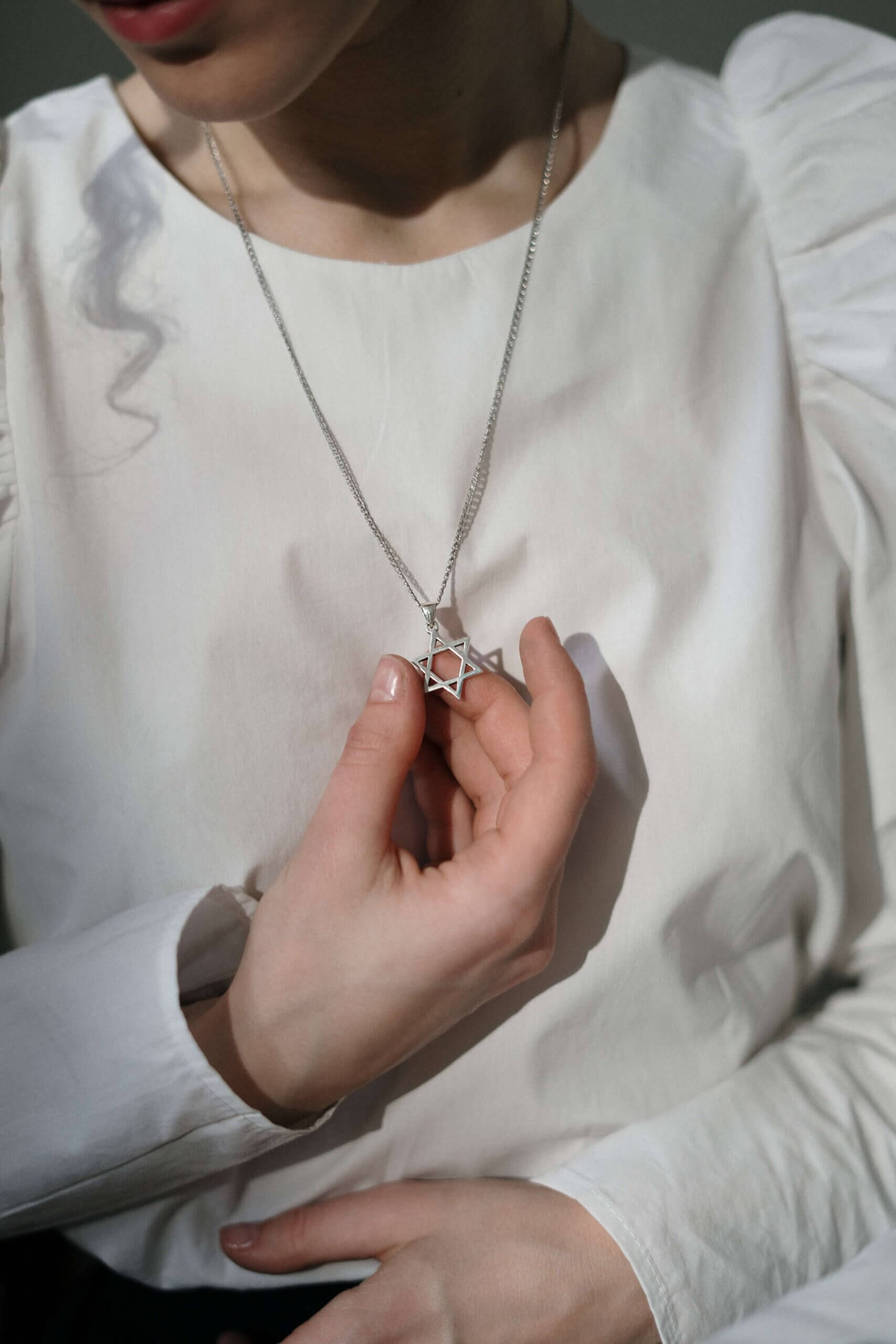
Judaizm: Gwiazda Dawida
Symbol Gwiazdy Dawida jest kwintesencją judaizmu, używanym na całym świecie jako sposób na ukazanie siebie jako członka wiary żydowskiej. Jak wiele innych rodzajów insygniów religijnych, Gwiazda Dawia może być noszona zarówno przez mężczyzn, jak i kobiety, a jej projekt jest zazwyczaj prosty. W wielu przypadkach, gwiazda jest również połączona z modlitwą Szema lub Chai w alfabecie hebrajskim. Najbardziej popularną formą biżuterii jest mały wisiorek z gwiazdą, połączony z prostym łańcuszkiem.
Taoizm: Yin-Yang
Yin-Yang, używany jako symbol pokoju i równowagi w wielu różnych systemach wierzeń, postrzegany jest również jako ogólna reprezentacja kultury chińskiej. W szczególności symbolizuje on jednak podstawową część taoizmu: aby istniała harmonia, konieczne są dwie pierwotne i przeciwne, lecz uzupełniające się siły. Taoizm podkreśla znaczenie prowadzenia prostego, uczciwego życia, które sprzyja harmonii z naturą i innymi istotami. Ta czarno-biała ikona służy jako przypomnienie tej ideologii i może być noszona na prawie każdym rodzaju biżuterii lub ozdób. Od obrączek na palcach po nakrycia głowy, jest to popularna ikona zarówno dla wierzących, jak i niewierzących na całym świecie.
Bahaizm: Gwiazda dziewięcioramienna
Religia Bahá’í, nazywana najmłodszą światową religią, ma wiele symboli. Wszystkie one wywodzącą się od arabskiego słowa Bahá’, oznaczającego „blask” lub „wspaniałość”, którego numeryczna wartość wynosi 9. Dziewiątka uważana jest w bahaizmie za doskonałość, reprezentując całkowitość i spełnienie. Nie dziwi zatem, że do najpopularniejszych insygniów bahaizmu należy dziewięcioramienna gwiazda, nazywana haykal, czyli świątynia. Wyznawcy wiary Bahá’í często noszą ikonę gwiazdy w formie pierścienia lub wisiorka, w fundamentalnych kolorach wiary: złota, srebra i błękitu.
Wyjątkowa biżuteria na zamówienie
Twórcy biżuterii znajdują wciąż nowe wzory i sposoby, aby zaprezentować symbole religijne w swoich projektach. Nasza pracownia jubilerska specjalizuje się w tworzeniu unikatowej, spersonalizowanej złotej biżuterii na zamówienie – kamienie szlachetne osadzamy w metalach najlepszej jakości – złocie, platynie jak i srebrze. Jeśli masz pomysł na ciekawy wzór pierścionka czy naszyjnika, skontaktuj się z naszą projektantką biżuterii – wspólnie stworzymy jedyny w swoim rodzaju projekt, zgodny z Twoimi wierzeniami i gustem.